Content Pruning for SEO: How Removing Weak Pages Can Improve Rankings
Introduction to Content Pruning for SEO
As websites grow, so does their content library. Blog posts, service pages, landing pages, and older resources can accumulate over time, creating hundreds or even thousands of URLs. While publishing new content is important, maintaining existing content is just as valuable.
Content pruning is the process of reviewing existing pages and deciding whether they should be kept, updated, consolidated, redirected, or removed. The goal is not to reduce page count. Instead, it is to ensure every page continues to provide value to users and supports the overall goals of the website.
A well-planned content pruning strategy can help improve content quality, reduce duplication, and create a stronger website structure for both users and search engines.
What Is Content Pruning?
Content pruning is a structured content maintenance process. Rather than allowing outdated or underperforming pages to remain untouched, website owners regularly evaluate content and determine the best course of action.
In some cases, a page may simply need updated information. In others, two similar articles may be combined into a stronger resource. Some pages may no longer serve any useful purpose and can be removed.
The important point is that content pruning is not the same as content deletion. Removing pages is only one possible outcome. The objective is always to improve the overall usefulness and quality of a website.
Why Content Pruning Matters for SEO
Improves Content Quality
Search engines aim to provide users with useful, relevant, and accurate information. When a website contains large amounts of outdated, thin, or unhelpful content, it can become harder to demonstrate consistent quality.
Regular content reviews help ensure information remains current and valuable.
Helps Search Engines Focus on Important Content
For larger websites, reducing unnecessary pages can improve crawl efficiency. This allows search engines to spend more time discovering and revisiting pages that matter most.
Reduces Keyword Cannibalisation
When multiple pages target the same search intent, they may compete against one another in search results. Consolidating overlapping content can help create clearer ranking signals.
Improves User Experience
Visitors expect accurate information and clear navigation. Removing outdated content and improving existing resources makes it easier for users to find what they need.
Supports Topical Relevance
Comprehensive content organised around important topics helps search engines better understand a website’s expertise and focus areas.
Signs Your Website May Need Content Pruning
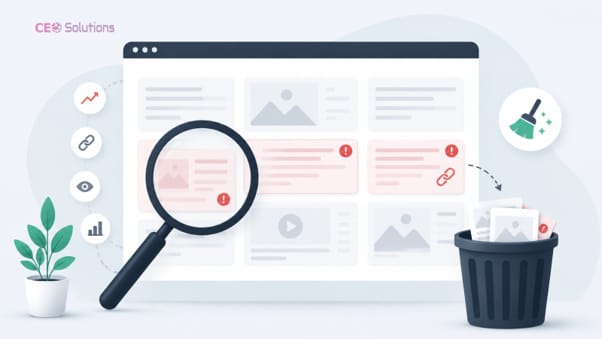
Not every page deserves permanent space on a website. Some common warning signs include:
Pages Receiving Little or No Organic Traffic
Consistently low visibility may indicate that a page no longer meets user needs or search demand.
Outdated Content
Old statistics, expired promotions, discontinued services, and outdated recommendations can reduce content value.
Thin Content
Pages that provide limited information or fail to answer user questions fully may need improvement or consolidation.
Duplicate or Overlapping Articles
Multiple articles covering similar topics can create unnecessary competition.
Low Engagement
Metrics such as poor conversions, short visit durations, and weak user interaction may indicate content issues.
Legacy Content
Older campaigns, obsolete announcements, and retired product pages may no longer support business objectives.
How to Conduct a Content Audit
Before making any pruning decisions, perform a thorough content audit.
Build a Content Inventory
Create a master list of all indexable URLs on your website. This provides a complete view of the content that requires evaluation.
Gather Performance Data
Review important metrics such as:
- Organic traffic
- Impressions
- Click-through rates
- Conversions
- Backlinks
- Internal links
Review Search Intent
Search behaviour changes over time. Assess whether each page still matches what users are looking for today.
Evaluate Content Quality
Review content for accuracy, relevance, depth, and overall usefulness.
Prioritise Key Pages
Focus first on pages that have high business value or show signs of declining performance.
The Four Content Pruning Actions
1. Keep High-Performing Content
Pages that consistently perform well should generally remain unchanged. Continue monitoring them to ensure they stay relevant.
2. Update Existing Content
Many pages can regain visibility through updates. Refresh outdated information, improve structure, add new insights, and ensure the content aligns with current user expectations.
3. Consolidate Similar Content
When multiple pages cover the same topic, merging them often creates a stronger resource. Consolidation can improve user experience while reducing keyword overlap.
4. Remove Low-Value Content
Removal may be appropriate when content receives no meaningful traffic, has no valuable backlinks, and no longer serves a strategic purpose. However, decisions should always be supported by data.
How to Consolidate Content Correctly
Content consolidation is often one of the most effective pruning techniques.
Identify Competing Pages
Look for articles targeting the same topic, keyword group, or search intent.
Choose the Strongest URL
Select the page with the best combination of traffic, authority, backlinks, and historical performance.
Merge Valuable Information
Combine useful insights from all related pages into a single, comprehensive resource.
Use 301 Redirects
Redirect old URLs to the consolidated page. This helps preserve authority, maintain user experience, and prevent broken links.
Common Content Pruning Mistakes to Avoid
Deleting Pages Based Only on Traffic
Traffic is only one metric. A page may still contribute through conversions, backlinks, or supporting customer journeys.
Ignoring Backlinks
Removing a page without reviewing inbound links can result in unnecessary authority loss.
Removing Content Without Redirects
Failing to implement redirects can create broken user experiences and wasted link equity.
Pruning Too Aggressively
Content pruning should improve a website, not simply reduce the number of pages.
Making Decisions Without Data
Effective pruning relies on evidence, not assumptions. Always review performance metrics before taking action.
Measuring the Impact of Content Pruning
After implementing changes, track performance over time.
Monitor Organic Traffic
Compare traffic levels before and after pruning to identify trends.
Review Rankings
Track important keywords and topic groups to assess visibility changes.
Analyse Crawl Activity
Review indexing and crawl behaviour to understand how search engines interact with your content.
Measure Engagement
Monitor user interactions, time on page, and conversions to evaluate content quality improvements.
Evaluate Topic Performance
Assess whether related content groups perform better as a whole following consolidation and updates.
How Often Should You Perform Content Pruning?
The ideal frequency depends on the size of your website.
Small Websites
An annual review is often sufficient.
Growing Business Websites
A review every six months can help maintain content quality as the website expands.
Large Websites
Websites with extensive content libraries often benefit from ongoing content maintenance processes.
Rather than treating content pruning as a one-time task, it should become part of a long-term SEO strategy.
Content Pruning in Modern SEO
Modern SEO is increasingly focused on quality, relevance, and user satisfaction rather than simply publishing more pages.
Maintaining content that aligns with user needs helps websites remain useful and competitive over time. A focused content library is easier to manage, easier to navigate, and often more effective than a large collection of outdated or overlapping pages.
Regular content maintenance supports long-term organic visibility and helps ensure that a website continues to deliver value to both users and search engines.
Want to Increase Your Organic Traffic & Get More Leads?
Conclusion
Content pruning is not about deleting content for the sake of reducing page count. It is a strategic process that helps websites maintain quality, relevance, and usability over time.
By reviewing existing pages and making informed decisions based on performance data, website owners can improve content quality, reduce duplication, and strengthen overall website structure.
Whether a page is updated, consolidated, redirected, or removed, the goal should always be to create a better experience for users. When treated as an ongoing part of SEO management, content pruning can contribute to stronger organic visibility, better engagement, and a healthier website in the long term.
YOU DESERVE THE BEST
Work With Top-Rated SEO Company In Singapore
Let Us Help You Optimize Your Site Today
Frequently Asked Questions (FAQs)
Q: What is content pruning in SEO?
A. Content pruning is the process of reviewing existing website content and deciding whether pages should be kept, updated, consolidated, redirected, or removed to improve website quality and performance.
Q: Does content pruning improve SEO?
A. Content pruning can improve SEO when it helps eliminate outdated information, reduce content overlap, and strengthen the overall quality of a website.
Q: Should I delete pages with low traffic?
A. Not always. Low traffic alone is not enough reason to remove a page. Consider backlinks, conversions, user value, and business relevance before making a decision.
Q: How often should content pruning be performed?
A. Small websites may only require annual reviews, while larger websites often benefit from more frequent content audits and ongoing maintenance.
Q: What is the difference between content pruning and content updating?
A. Content updating improves an existing page by refreshing information and enhancing quality. Content pruning is a broader process that may involve updating, consolidating, redirecting, or removing content depending on its performance and value.
Get A Proposal
In a hurry? Just Give us a call or WhatsApp us at (65) 9385-8095
Stay In Touch
Call/Whatsapp us at (65) 9385-8095 or you may request for a callback.
Our Office Hours:
Monday – Friday: 9am to 6pm
We are closed on Saturday, Sunday and Public Holidays.