Generative Engine Optimisation (GEO): How to Get Your Brand Found in AI Search
Introduction: How Generative Engine Optimisation Works
Search behaviour is changing. Instead of relying only on traditional search results, potential customers can now ask platforms such as ChatGPT, Gemini and Perplexity to explain a subject, compare providers or recommend a suitable service.
This creates another way for businesses to be discovered. A customer may first encounter your brand inside an AI-generated answer before visiting your website or searching for your company by name.
Generative engine optimisation focuses on improving the likelihood that AI systems can find, understand and accurately represent your business. It does not replace search engine optimisation. It builds on the same foundations of useful content, technical accessibility, authority and trust.
What Is Generative Engine Optimisation?
Generative engine optimisation is the process of improving a brand’s content and online presence so that AI-powered search systems can understand and use its information.
Traditional SEO focuses mainly on visibility in search results. GEO focuses on visibility within AI-generated answers, summaries, comparisons and recommendations.
A brand may be named, cited, shortlisted or accurately summarised. The goal is to become a credible source for commercially relevant questions.
How AI Search Finds and Uses Information
AI platforms do not all retrieve information in the same way.
Training-based systems
Some responses rely mainly on model-training data. Businesses cannot control the sources or update schedule, so this is a long-term reputation issue rather than a direct tactic.
Search-based systems
Other systems retrieve current information from webpages, search indexes or databases. Pages must therefore be accessible, relevant and clearly written.
For Google Search, there are no separate technical requirements for AI Overviews or AI Mode. Strong SEO fundamentals remain the starting point.
Hybrid systems
Many platforms combine previous knowledge with live retrieval, using the web for current details such as services, prices or local recommendations.
The role of retrieval
Retrieval-augmented generation lets an AI system search external sources before answering. Clear, current content can help, but no format guarantees selection, and visibility differs between platforms.
GEO vs SEO: What Is the Difference?
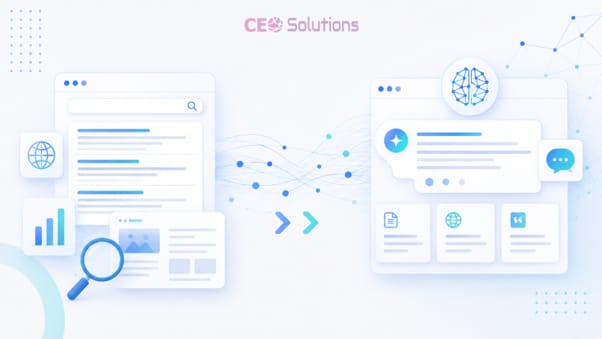
SEO focuses on search results, organic traffic, and rankings. GEO focuses on whether AI systems can understand a brand and use its information in generated answers.
GEO gives added importance to factual clarity, consistent brand information, and credible third-party references. It should complement, not replace, SEO.
Why GEO Matters for Brands
AI search can influence customer decisions before someone reaches a business website.
A user may ask an AI tool to compare providers, and brands included may enter the shortlist.
Accuracy also matters. AI systems may rely on outdated profiles, reviews or third-party pages, so GEO should improve both discoverability and factual consistency.
Start with an AI Visibility Audit
Before publishing more content, review how your brand currently appears in AI search.
Identify commercially relevant prompts
Test questions genuine customers ask about providers, services, costs and suitability. Use keyword research, enquiries and sales conversations for ideas.
Establish a visibility baseline
Record whether your brand appears, which competitors are mentioned, how the business is described and which sources are cited.
Because AI answers can change, test important prompts more than once and record the prompt, platform and date.
Identify content and reputation gaps
Look for subjects where competitors appear, but your brand does not. This may reveal weak pages, missing comparisons or limited authority.
Also identify inaccurate profiles and outdated third-party information, then set clear priorities.
Build a Clear and Consistent Brand Narrative
Review your main pages, team profiles and business listings. Names, services, locations and expertise should be accurate and consistent.
Avoid unsupported claims such as “the leading provider”. Experience, qualifications, documented methods and case studies are more useful.
Create Content That AI Systems Can Understand and Cite
Content should first be written for people, then organised so its meaning is easy to identify.
Answer the main question early
Provide a direct answer near the start of each important section, then add context and examples.
Organise content around real questions
Use headings that match how customers research a topic. Useful formats include guides, FAQs, comparisons and case studies.
Make sections independently understandable
Use descriptive headings and focused paragraphs. This improves readability and may help retrieval systems identify relevant passages.
Do not split content into unnatural fragments solely for AI search.
Publish original and verifiable information
Use genuine expertise, original research, and documented case studies. Avoid unsupported statistics and generic summaries.
Maintain topical depth
Build connected resources around subjects your business genuinely understands, then use internal links to show how they relate.
Keep important information current
Review pages containing services, prices, staff details, and time-sensitive advice. Outdated information may cause customers or AI systems to rely on another source.
Make Your Website Accessible to Search and AI Crawlers
Useful content cannot support visibility if crawlers cannot access it.
Crawlability and indexability
Check robots directives, noindex tags, canonical tags, XML sitemaps and internal links. Important pages should not be blocked, duplicated or isolated.
Rendering and page accessibility
Crawler capabilities differ. Google can process accessible JavaScript, but heavily client-rendered sites add complexity, so important information should remain visible in the rendered page.
Site structure and internal linking
Use logical navigation, descriptive URLs and contextual internal links. A clear structure helps users and search systems understand relationships between services and topics.
Structured data
Structured data can clarify information about organisations, people, services, products and articles.
There is no special GEO schema. Markup may support machine understanding, but it does not guarantee an AI mention or citation.
Accessible content formats
Do not place essential information only inside images, videos or PDFs. Important details and case studies should also be available as crawlable webpage text.
Strengthen Authority Beyond Your Own Website
Third-party sources can help confirm whether a brand’s claims are credible.
Earn credible third-party mentions
Useful opportunities include expert commentary, original research, interviews and relevant industry contributions.
Linked and unlinked mentions may provide context to some systems, but their influence varies and should not be treated as guaranteed ranking factors.
Participate selectively in relevant communities
Contribute where your team has genuine expertise. Avoid disguised advertising, fabricated reviews, and repetitive promotional posts.
Monitor external brand information
Review how important external sources describe your business. Correct outdated listings and inaccurate profiles at the source where possible.
Optimise for Commercially Valuable AI Prompts
Prioritise prompts connected with real decisions, such as choosing a provider, comparing services or understanding suitability and cost.
Explain benefits, limitations and selection criteria honestly. Add Singapore context only where it affects the answer.
How to Measure GEO Performance
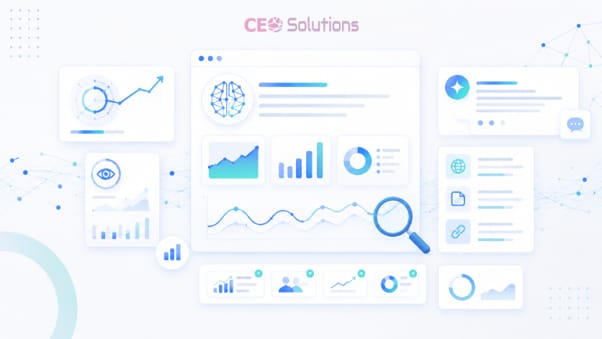
GEO measurement should consider both visibility and business impact.
AI visibility metrics
Track brand mentions, cited pages, competitor appearances and description accuracy. Treat these as observations rather than stable rankings because responses can change.
Website and business metrics
Compare visibility with branded searches, direct visits, referral traffic, enquiries and qualified leads.
Attribution may be indirect, so focus on whether AI visibility supports discovery and consideration.
Common GEO Mistakes to Avoid
Common mistakes include treating GEO as a replacement for SEO, publishing generic AI-written pages, targeting irrelevant prompts, and relying only on self-published claims.
Do not assume schema guarantees citations or treat one response as a permanent ranking. Content must remain useful to people.
A Practical GEO Action Plan
- Define the topics and customer decisions that matter.
- Build a list of representative AI prompts.
- Audit mentions, competitors, and cited sources.
- Correct inconsistent brand information.
- Improve priority pages with clear answers.
- Resolve crawlability and site-structure issues.
- Publish original, expert-led resources.
- Earn credible external coverage.
- Track visibility alongside enquiries and leads.
- Review results regularly.
Want to Increase Your Organic Traffic & Get More Leads?
Conclusion
Generative engine optimisation is not a shortcut or a replacement for established SEO.
Brands are more likely to be found in AI search when they publish useful content, maintain clear positioning, provide accurate information and build credible recognition beyond their own website.
The most practical approach is to become a source that customers can trust, search systems can access, and AI platforms can understand.
YOU DESERVE THE BEST
Work With Top-Rated SEO Company In Singapore
Let Us Help You Optimize Your Site Today
Frequently Asked Questions (FAQs)
Q: Is generative engine optimisation replacing SEO?
A. No. GEO builds on established SEO practices. Crawlability, relevance, authority and useful content remain important for traditional and AI-powered search.
Q: How can I make my brand appear in AI-generated answers?
A. Publish clear, verifiable content, keep your website accessible, and maintain consistent business information across credible sources.
Q: Can GEO guarantee an AI mention?
A. No. GEO can improve the conditions for visibility, but AI platforms control their own models, retrieval systems and source selection.
Q: How do I measure GEO results?
A. Monitor mentions, citations, competitor visibility and description accuracy alongside branded searches, visits, enquiries and leads.
Q: How long does GEO take to work?
A. There is no universal timeframe. Results depend on crawler access, indexing, retrieval systems, third-party source changes and model updates.
Get A Proposal
In a hurry? Just Give us a call or WhatsApp us at (65) 9385-8095
Stay In Touch
Call/Whatsapp us at (65) 9385-8095 or you may request for a callback.
Our Office Hours:
Monday – Friday: 9am to 6pm
We are closed on Saturday, Sunday and Public Holidays.